Palace Route
What the route is about
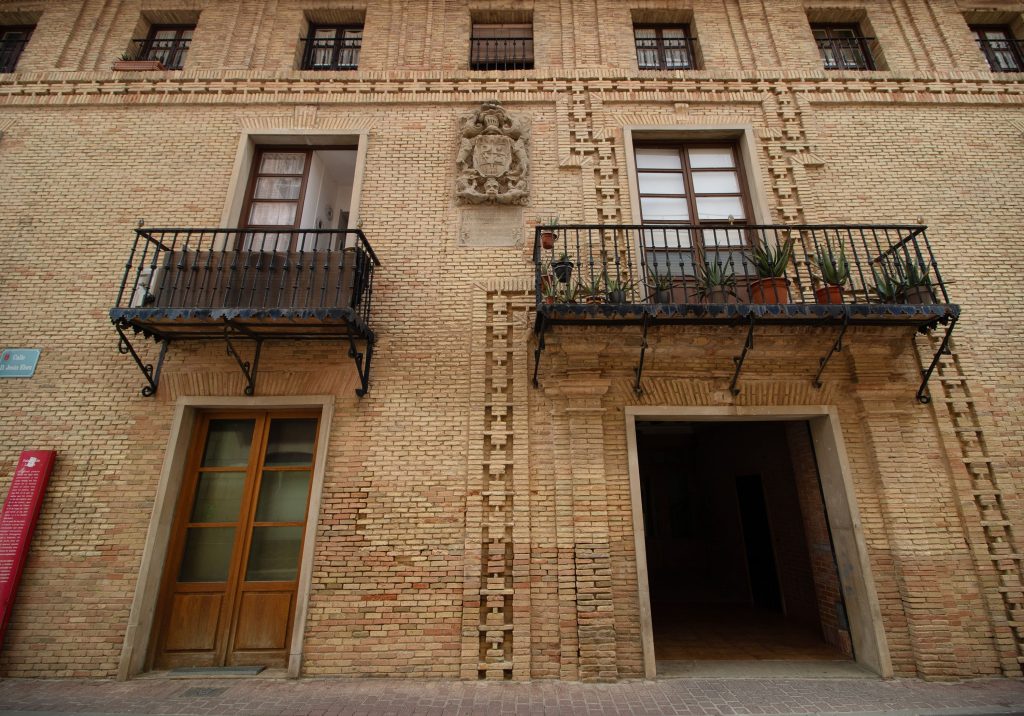
The Palace Route offers a walk through the historic centre of Falces, entering the world of nobles and hidalgos through manor houses and palaces built mainly in the 16th and 17th centuries. A common feature of these buildings is the presence of heraldic coats of arms on their facades, together with decorative details such as eaves and elements linked to Mudéjar tradition.
It is a way to discover the Baroque palace houses typical of the Ribera, integrated into the town layout and marked within the municipal tourist street map.
Essential details
- Format: Urban route through the streets of the historic centre
- Approximate duration: 1 hour 30 minutes (guided visit)
- Price: Free
- Availability: All year round (check conditions)
Falces and the local context of the route
Falces is a municipality in Navarre, in the Merindad of Olite. It covers around 115 km² and has a population of about 2,300 inhabitants.
It is located in the Ribera Alta, beside the River Arga, around 57 kilometres south of Pamplona and at an altitude of approximately 295 metres above sea level.
Main stops
The Palace Route includes seven stops marked on the municipal tourist street map. The route presents different examples of Baroque civil architecture and manor houses linked to historic lineages of the town.
1. Díez de Texada Palace
A 17th-century Baroque building, notable for its Rococo family coat of arms dated to the second half of the 18th century. It stands near Placeta Maya and is one of the most representative examples on the route.
2. Casa Autor
A 17th-century manor house belonging to the Autor family, with a masonry facade and brick bands. Its facade features a Baroque coat of arms from the late 17th century, accompanied by an inscription identifying the family arms. The municipal archive preserves references to Pedro Autor as town councillor in 1637 and documents the family’s ties with the Zala lineage in 1776.
3. Irumberri Palace
A 17th-century Baroque palace built with ashlar masonry and boxed pilasters at the corners. Its striking coat of arms belongs to the Irumberri lineage, a wealthy Falces family that established links with the Monreal family and later with the Ochagavía family. In the 20th century the building also had social uses: the Casino Nuevo recreational society was installed on its first floor, followed by the Catholic Workers’ Circle of Falces; between 1925 and 1928 it even hosted silent film screenings.
4. Acedo Palace
A monumental 16th-century building, with a main ashlar body around the semicircular entrance opening. Its true dimensions can be appreciated by following the line of the roof eaves. In 1703 the balconies were remodelled in Baroque style, without detracting from the ensemble. Casa Acedo was the seat of an old noble family, some of whose members sat in the Cortes of the kingdom; it later became linked to the Ochagavía and San Cristóbal families, connected with the Barony of San Vicente Ferrer.
5. Ochagavía Palace
A monumental 17th-century Baroque palace, also linked to the Ximénez Embún family, transformed over time. Its main entrance opens onto Calle San José, with an old brick facade, grilles, wrought-iron balconies and a stone coat of arms. The house preserves the structure of a noble residence, with ground floor, main floor and attic; inside, the main staircase, the gallery overlooking the courtyard, salons, bedrooms and chapel stand out. In 2006 it was purchased and restored to become a rural guesthouse, while preserving the original character of the building as far as possible.
6. Palace of Captain Don Diego de Larrea
A monumental 17th-century Baroque palace belonging to the Larrea family. Beneath its rich coat of arms is a 16th-century stone plaque explaining that the arms belonged to Captain Don Diego de Larrea, who left Falces on 19 May 1522 to serve King Charles I and his mother Queen Joanna. Over time, the Larrea family became related to other Falces lineages such as the Ochagavía, Acedo and Badarán families.
7. Zala-Badarán Palace
A 17th-century building originally belonging to the Zala family, whose notable members included the musician and composer Antonio Bernardo de Zala y Galdeano, born in 1675. Through marriage, the Zala family became linked to the Badarán family, hidalgos established in the town since 1431, who inherited the house. Among their prominent members were Francisco Paula Badarán de Osinalde y Zala and Ramón María de Badarán y Eseverri, provincial deputy and senator-elect for Navarre, whose mediation helped bring the Civil Guard to Falces in 1878.
Nearby complements
In addition to the seven palace houses, the walk can be completed with other outstanding elements of local heritage, such as the Church of Santa María, a proto-Gothic monument from the 13th century with later reforms in the 16th and 18th centuries.
The tourist street map also marks other points of interest in the historic centre, such as a 16th-century house and the old hospital, which broaden the historical context of the route.
Practical information
The guided visit lasts approximately 1 hour and 30 minutes, is free of charge and is offered throughout the year, although prior availability may need to be checked with the Falces Tourist Office.