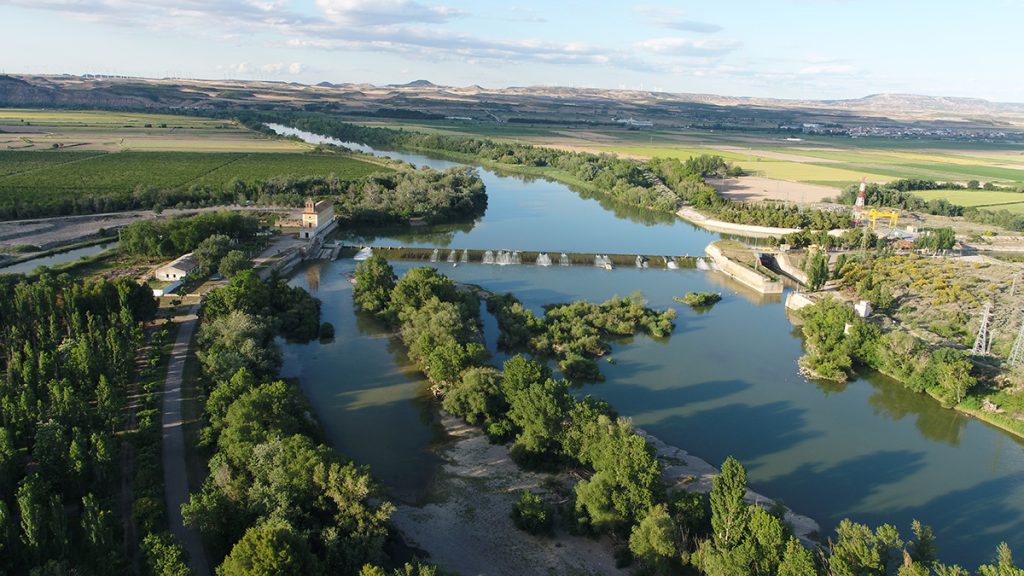
The Ebro Green Corridor includes a network of hydraulic infrastructures that, beyond regulating, supplying and irrigating, form part of the landscape and everyday use of the territory. These works, from different periods, are integrated into routes suitable for walking, cycling and nature observation.
One of the most outstanding elements is the Imperial Canal of Aragon, built in the late 18th century. It runs for 110 kilometres between Fontellas and Fuentes de Ebro and, in Navarre, passes through Fontellas, Ribaforada, Buñuel and Cortes, supplying extensive agricultural areas and leaving a visible mark on the landscape.
In Tudela, the Molinar River Canal, six kilometres long, carries water from the Queiles River to irrigate traditional market gardens. Its route is accessible to pedestrians and cyclists. Also in Tudela is the Las Norias Dam, built in the 17th century with stone masonry and still in operation.
In Azagra, the Machín Dam stands out. Dating from the 16th century, it is considered the first modern pile-and-riprap dam in Spain. More recent is the Tauste Canal, from the 20th century, which runs parallel to the Ebro for 44 kilometres and crosses Cabanillas, Fustiñana, Ribaforada, Buñuel and Cortes. Its route combines modern engineering works such as dams, weirs and pumping stations with natural settings suitable for outdoor leisure.
The ensemble is completed by two wetlands of high ecological value: Balsa del Pulguer, between Tudela and Cascante, known as “the beach of La Ribera”, and Badina Escudera, in the Tudela area, an important refuge for birds and biodiversity. Both sites are designated Special Areas of Conservation (SAC) due to their ecological importance.