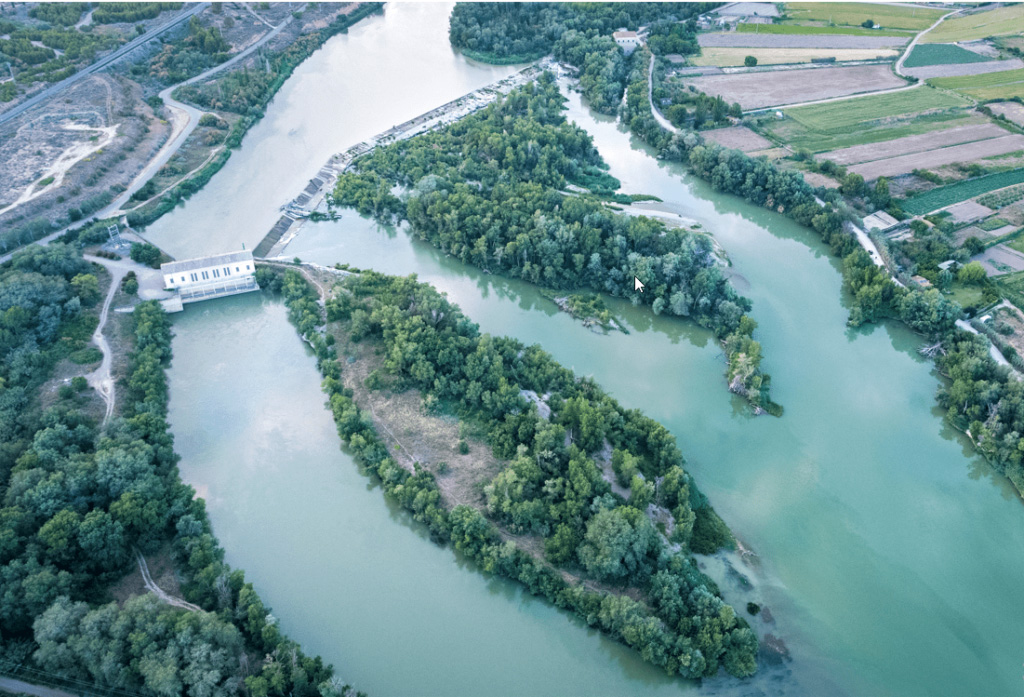
Stage 3 follows a different route along each bank of the river, resulting in either a 37 km circular route or a linear route between Castejón and Tudela. The route along the left bank begins at Castejón, on the opposite bank of the River Ebro.
Shortly afterwards, it passes by Soto Alto and immediately moves away from the River Ebro, in an area where the river forms some large meanders. From there, you can turn off the route to visit Valtierra, 1.6 km away, and Arguedas, 3.5 km away. After passing a rest area, the final stretch to Tudela runs right alongside the River Ebro heading south, parallel to the road to Arguedas.
The route of Stage 3 along the right bank of the river starts in Castejón and largely follows the Way of St James and the Ignatian Way. It passes through several areas of natural interest, notably the Soto de los Tetones, and in its final section it loops around the area of orchards and groves known as La Mejana. The two routes for this stage converge at the iconic Ebro Bridge in Tudela.
Fiche technique

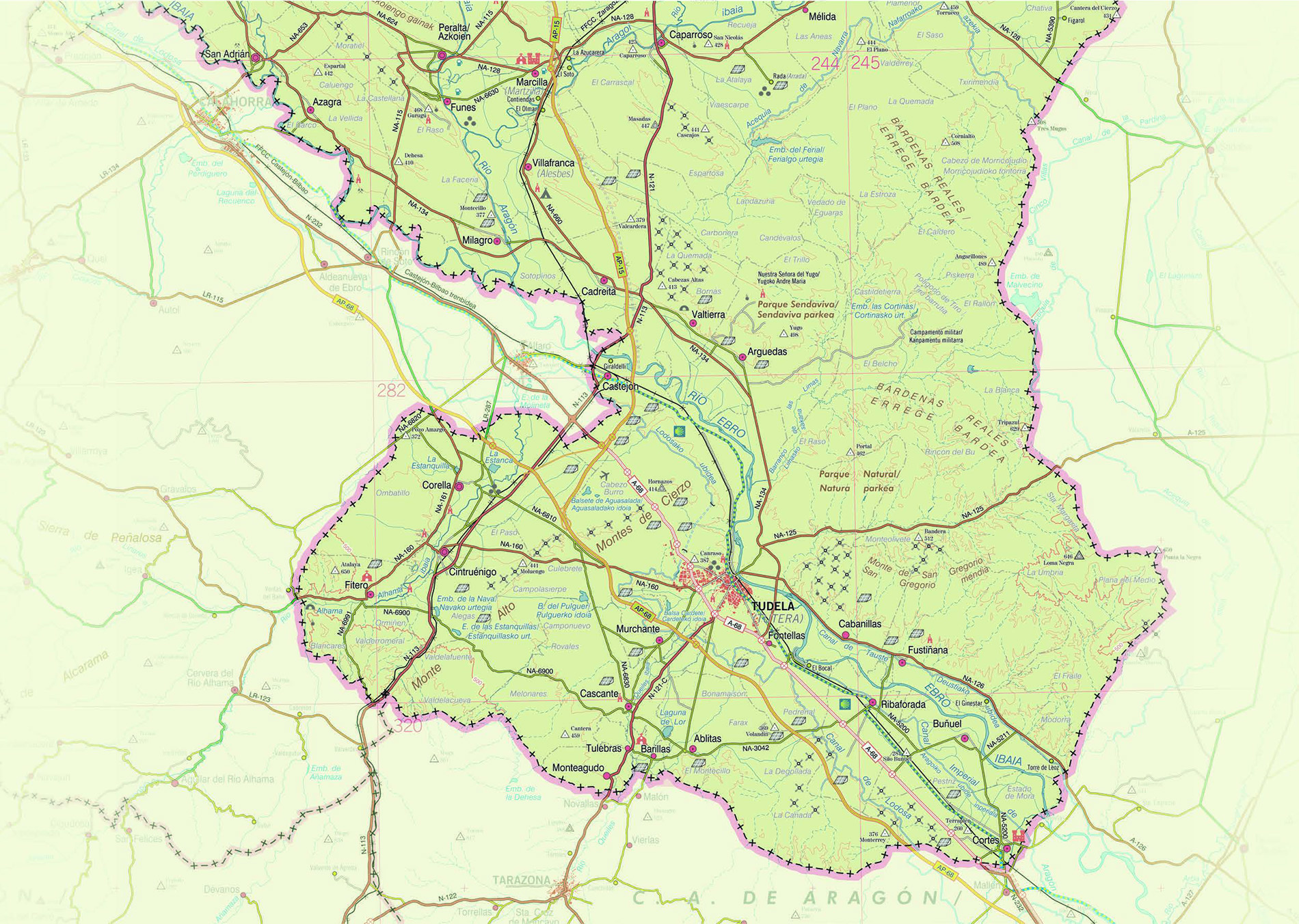


This section of the Green Corridor runs along the right bank of the Ebro, forming a circular loop that combines the river environment with ancient paths and a unique geological landscape. The route alongside the river follows the Ebro Nature Trail, whilst the inland section links Tudela, Fontellas and El Bocal via the Tarazonica Greenway, sharing sections with the Way of St James and the Ignatian Way.
This section, which features a Bikepoint in Tudela, is ideal for cycling due to its moderate distance and elevation gain. It connects villages and historic trails, guiding visitors through the desert-like geology of a landscape unique to Navarre and the lush greenery of the Ebro.
This landscape began to take shape between 35 and 40 million years ago, when the Ebro Basin was a vast inland lake that accumulated sediments up to 6,000 metres deep. Ten million years ago, it opened up towards the Mediterranean and the River Ebro was born, marking the start of the carving out of a drainage network that still shapes the landscape today.
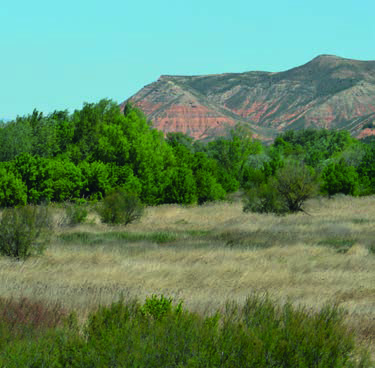
In the Bardena, the semi-arid climate and erosion of materials of varying hardness have shaped a landscape known as ‘badlands’. This terrain contrasts with the flat plains of the Ebro Valley, where the gentler slope and the accumulation of tens of metres of recent sediment have resulted in fertile soils that are used for agriculture.